
Startup
Company Name Reservation in India: Complete Guide for Businesses
How to reserve a company name in India: SPICe+ Part A and RUN, naming rules, documents, step-by-step process, validity and common reasons for rejection.
Read More
The Taxplan Advisor blog is a library of CA-authored guides on income tax return (ITR) filing, GST compliance, TDS and tax planning in India. Each article explains one tax topic in plain language, with the latest rules and due dates.
Written by the Taxplan Advisor editorial team and reviewed by Chartered Accountants. Last updated .

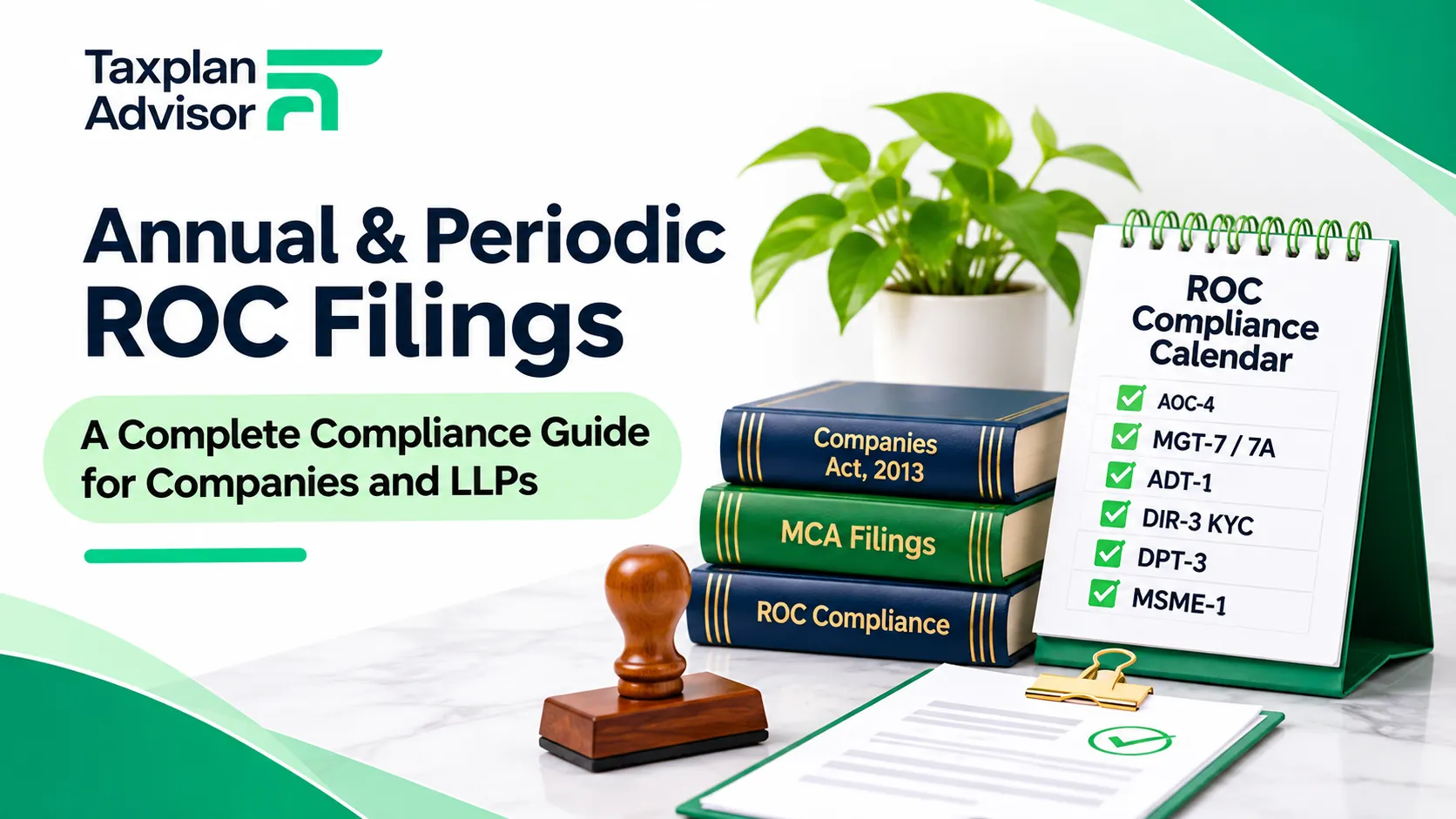



How to reserve a company name in India: SPICe+ Part A and RUN, naming rules, documents, step-by-step process, validity and common reasons for rejection.

ITAT Mumbai set aside a ₹1.46 crore reassessment against a taxpayer earning ₹3,500 a month. See why the notice failed and five lessons for taxpayers.

Gujarat High Court quashed an income tax reassessment notice based on a seized broker's inquiry register. Key facts, reasoning and what it means.

A practical guide to NRI and late ITR filing in India: when an NRI must file, belated returns, documents to prepare and common mistakes to avoid.

How to understand an income tax notice and respond correctly: first steps, common reasons, documents to gather, replying online and mistakes to avoid.

Learn when to take an online CA consultation, how to prepare, what it covers, how to choose a service and what fees to check before you book.

A guide to TDS return filing in India for businesses and deductors: documents, quarterly returns, challan reconciliation, late filing and corrections.

Understand GST filing in India: returns, GSTR-1 and GSTR-3B, input tax credit reconciliation, documents, common mistakes and a pre-filing checklist.

A practical guide to ITR filing in India: who needs support, documents to prepare, how to file online, belated and revised returns, and common mistakes.

Founders Ramzan Hasnani and Chirag N Shah have been nominated for the Bharat Shreshtha Ratna Sanman 2026. Discover how TaxPlan Advisors is making expert tax advisory and compliance services more accessible across India.
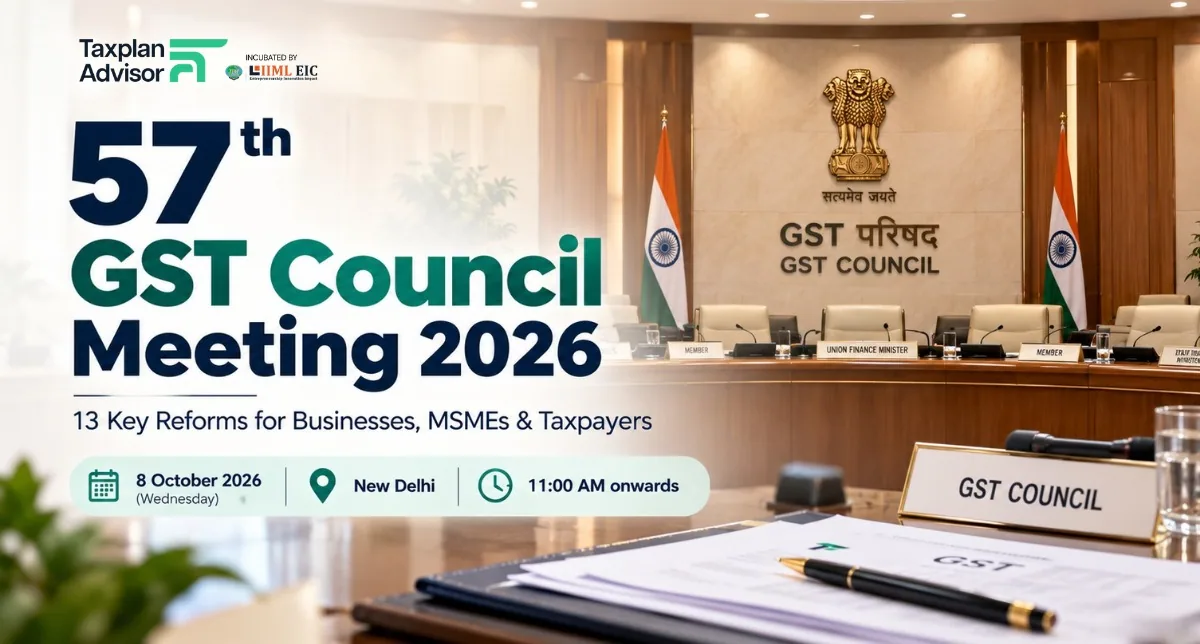
Faster GST refunds with 90% provisional payout, removal of arrest powers, ITC on employee insurance, a ₹10,000 notice threshold, lower general penalty and a ₹5 crore prosecution threshold — all 13 recommendations explained.

Founder & Director Ramzan Hasnani of TaxPlan Advisor is among the business leaders honoured at ET Indo Global Leaders 2026 in Dubai, as listed by Gulf News.

UPI charges explained — what's changed, who pays MDR, how it's calculated, and what it means for consumers, merchants and India's digital payments market.

Tax audit due date 2026, section 44AB limits, forms, documents and penalties explained in simple language.

Complete tax audit document checklist for businesses for FY 2025-26 and AY 2026-27.

CCFS 2026 closed on 15 September. Learn how to review pending ROC filings, fees and next steps.

ITR refund delayed in 2026? Check verification, processing, TDS, bank validation and outstanding demand.

Received a 143(1) intimation? Learn how to read adjustments, refund or demand and choose the right response.

Made a mistake in ITR? Understand AY 2026-27 revised-return timing, fees and filing steps.
Filed the wrong ITR form? Compare ITR-1, ITR-2, ITR-3 and ITR-4 and learn how to correct it.

A refund may be set off against an earlier outstanding demand after the prescribed process. Do not agree merely because the demand appears on the portal; t

TDS credit is not a standalone refund coupon. The PAN, assessment year, deductor entry and related income must align with the return before the credit is a

AIS is an information statement, not a final tax order. Wrong or duplicate information should be reviewed, supported and answered through the available fee

Yes. A refund generally shows that the return was processed; it does not guarantee that every disclosure has been examined or accepted for all purposes.

Filing is incomplete until the return is verified. The standard electronic-verification period is time bound, and a return left unverified can be treated a

A belated return lets many taxpayers file after the original deadline but before the statutory closing date. Late fee, interest and restrictions on carryin

The new Act applies to income of Tax Year 2026-27 onwards. It simplifies structure and terminology, but it does not rewrite FY 2025-26 returns under the ne

During 2026, taxpayers will see old and new terminology together. The safest approach is to link each label to the period in which income was earned.

The earning period, not the date on which you open the portal, usually decides the governing Act.

The new Rules renumber familiar certificates and statements for the new-law framework. Taxpayers must avoid using new numbers for an older assessment year

Use form mapping as a reference, not as a shortcut. Always confirm purpose, effective tax year and the latest notified rules.

Form 26 is relevant to the new-law tax-audit cycle for Tax Year 2026-27. It does not replace Forms 3CA, 3CB and 3CD for the FY 2025-26 audit due in 2026.

Advance tax generally applies when the estimated tax payable for Tax Year 2026-27 is Rs 10,000 or more after eligible credits. Estimate the full year and u
IMS lets a recipient act on supplier documents before their effect is reflected through the GST return ecosystem. Use Accept, Reject and Pending only after

GSTR-1 reports outward-supply details, while GSTR-3B reports summary liability and payment. A difference may arise from timing or error, but it must be exp

Reconciliation should classify each difference instead of forcing totals to agree. Missing supplier invoices, timing, credit notes, wrong GSTIN and blocked
A valid tax invoice in your records is important, but current ITC rules also depend on supplier reporting and statement visibility. Do not claim only becau

After filing, corrections normally move through amendments in a later permitted return period. The route depends on whether the error affects B2B or B2C cl

Suspension restricts normal GST operations while cancellation proceedings or system checks are pending. Read the notice, fix the cause and respond through

The annual-return cycle generally closes on 31 December following the financial year unless extended. Applicability and GSTR-9C requirements depend on taxp

For the July to September quarter, regular TDS statements are generally due by 31 October. Prepare challan and PAN reconciliation before generating Form 24

The taxpayer cannot directly add missing deductor data to Form 26AS. First determine whether the deductor failed to deposit tax, failed to file the stateme

Missed the 15 September 2026 advance tax deadline? Learn how much was due, interest rules, how to pay the shortfall, and the next deadlines for Tax Year 2026–27.

Our 5-day experience at IdeaBaaz Startup Fest 2026 in Bharat Mandapam, New Delhi — connecting with visionaries, investors like Arjun Vaidya, brand ambassador Pratik Gandhi, Jeet Wagh, and 40+ innovative startups.

A website-ready guide to UAE Corporate Tax (0% up to AED 375k, 9% above) and VAT (5% standard rate) — thresholds, Free Zone rules, Small Business Relief, EmaraTax registration, filing deadlines, and NRI considerations.

A website-ready guide to UAE VAT return filing & payment — 28-day deadline, standard tax period, output vs input VAT calculation, EmaraTax filing workflow, pre-filing reconciliation, and official FTA sources.

A website-ready guide to VAT registration in the UAE — the AED 375,000 mandatory and AED 187,500 voluntary thresholds, the 5% VAT rate, the EmaraTax registration process, required documents, and ongoing compliance.

A client filed an ITR showing a ₹59,000 refund through an online DIY portal. But when our CA reviewed it, we found online gaming winnings that were never reported while claiming full TDS credits.

Taxplan Advisor enters a new chapter through incubation at the Enterprise Incubation Centre of IIM Lucknow — a structured step toward building a smarter, more accessible future for tax and compliance in India.

Taxplan Advisor announces the successful completion of its first funding round, with Karim Vadsaria joining as Strategic Partner and Investor to support the company’s long-term growth.

When is GST registration actually mandatory? Turnover limits for goods vs services, interstate supply rules, the October 2023 e-commerce change, and why registering early usually pays off.

A complete comparison of the New and Old Tax Regimes for FY 2025-26 — tax slabs, deductions, exemptions, and which one saves you more tax.

Everything you need to know about filing your Income Tax Return for FY 2025-26 — forms, documents, deadlines, new vs old regime, and expert tips.
An income tax return (ITR) is the form in which you report your income, deductions and taxes paid to the Income Tax Department for a financial year. You generally must file if your income exceeds the basic exemption limit, and in certain cases, such as holding foreign assets, even below it.
Filing is incomplete until the return is verified. If you do not e-verify within the prescribed time, the return can be treated as not filed. That may bring late-filing fees, interest, and a stuck refund. You can verify online using Aadhaar OTP, net banking or an EVC.
The new regime has lower slab rates but allows few deductions, so it suits people who claim little. The old regime keeps deductions like HRA, Section 80C and home-loan interest, so it often suits people with large deductions. Compare your actual tax under both before choosing.
GST registration becomes mandatory once your aggregate turnover crosses the prescribed threshold, which depends on your state and whether you supply goods or services. Some businesses, such as certain interstate suppliers and e-commerce sellers, must register regardless of turnover. Check current limits before you start trading.
Our articles are written and reviewed by the Taxplan Advisor editorial team with Chartered Accountants and tax professionals. They explain ITR, GST, TDS and tax planning in plain language. They are general information, not personal advice, so consult a CA for your own situation.